You may stop having any lumps pain or nipple discharge that you used to have. Hi What you call extra precautions are fairly routine steps to take when there are changes from one mammogram to the next esp.

What S The Best Way To Screen Dense Breasts
Let us know how the second mammogram works out.
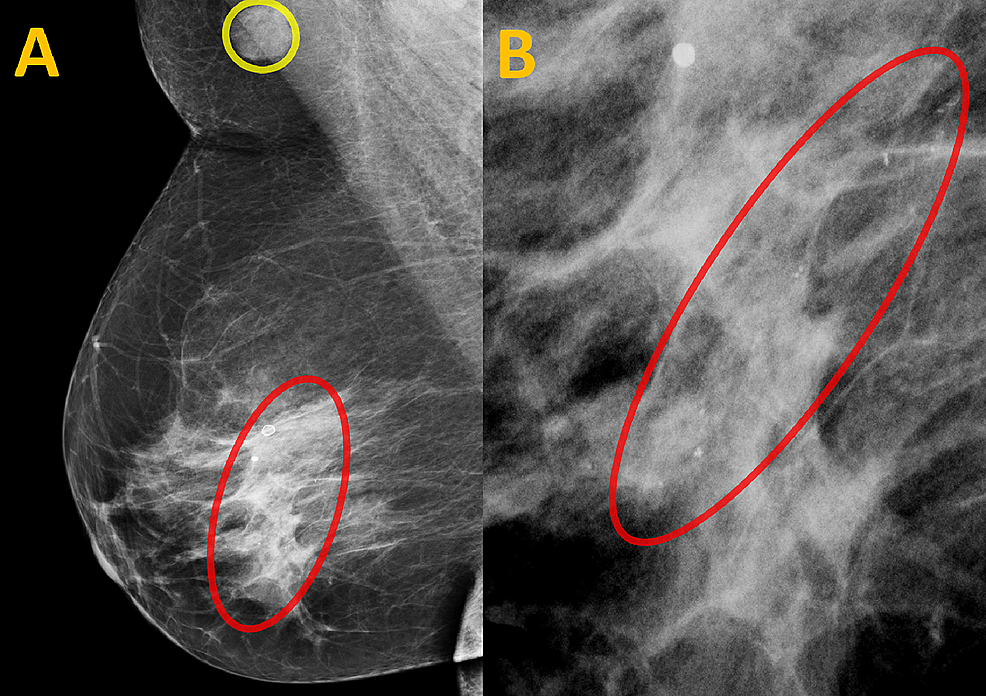
Change in breast tissue since last mammogram. Typically a breast cancer diagnosis will only be given to a very small percentage of women with asymmetrical breast tissue. You will lie face down inside a narrow tube for up to an hour. The pictures werent clear or didnt show some of your breast tissue and need to be retaken.
In the very dense breast the sensitivity goes down to as low as 48 percent. Some may develop noncancerous fibrous tissue within the normal glandular tissue. With the breasts being a fat storage site a weight change can cause a change in the mammographic density of the breast.
Furthermore only a very small percentage of women with asymmetrical breast tissue will end up actually having a breast biopsy. If found on mammogram densities require additional mammographic views compression views and p. Last modified on January 10 2017 at 1028 AM.
The calcium readily absorbs the X-rays from mammograms. Talk to your doctor about different methods. Fat decreases thereby decreasing density on mammogram.
This is a significant issue because in postmenopausal. 1 doctor agrees Send thanks to. This is an important etiology for increased breast density which is seen only on the irradiated breast.
Breast tissue density affects the ability of mammography to successfully detect tumors. The firm breast tissue becomes less firm that is why all the jokes about older ladies breasts hanging. Some breast changes can be felt by a woman or her health care provider but most can be detected only during an imaging procedure such as a mammogram MRI or ultrasound.
There sure are lots of changes as you get older. Birth control is important at that time of life but I sure hate to see hormones used. You have dense breast tissue which can make it hard to see some parts of your breasts.
Getting a call-back doesnt mean that you have a serious condition like breast cancer. Your breast tissue can change when youre ovulating and can often. Some women will need an MRI magnetic resonance imaging.
And because your breast tissue is less dense mammograms may be easier to interpret. This test may be used to look more closely at a change that was seen on a mammogram. Theres no way to know for sure whether the changes are due to the bioidentical hormones youve been taking but hormones of any type can certainly affect breast tissue.
Calcifications typically dont show up on ultrasounds and they never show up. Breast density is not a static. There are a number of reasons why a womans breasts can change in size or volume including trauma puberty and hormonal changes.
The Mayo Mammography Health Study research team is studying how womens breasts change in density over time what underlies these changes and whether these changes are associated with the risk of developing breast cancer. Whether a breast change was found by your doctor or you noticed a change its important to follow up with your doctor to have the change checked and properly diagnosed. Levels drop and your breast tissue becomes less dense and more fatty.
Change in Breast Tissue Since the Last Mammogram. Radiation can cause some changes in the breast tissue and skin. A womans breasts and their consistency naturally change over her lifetime.
Low-density breast tissue makes it easier for mammography to visualize tumors than does higher-density breast tissue. For several decades it has been known that high mammographic density representing a high amount of epithelial and stromal tissue in the breast is one of the strongest independent risk factors for breast cancer 1 2. Still the biological mechanism of the increased risk in women with high mammographic density is poorly understood 3.
The breast tissue changes w age and hormonal changes. These changes are benign even though a focal area of fibrosis can look like a cancer on the mammogram. I pay more attention to my breasts since my doctor did follow-up tests on changes that were found 8.
Involution of the breast implies that the ratio gland. Calcifications are small deposits of calcium that show up on mammograms as bright white specks or dots on the soft tissue background of the breasts. In the fatty breast mammography sensitivity is 98 percent.
This is based on changes to breast tissue since you had the last mammogram. In some cases your doctor will call you back after a mammogram is done. Ultrasound andor needle biopsy may be necessary.
Growth of a nodule of unknown type that is being followed. You could be called back after your mammogram because. The changes continue even after the radiation has been stopped.
This first mammogram after lumpectomy and radiation will become the new standard against which future mammograms of the remaining breast tissue are compared. Usually about 3 of breast screening mammograms will show asymmetric breast tissue. A breast MRI uses radio waves and strong magnets to make detailed pictures of the inside of the breast.