Having dense breast tissue is common and not abnormal but. You have dense breast tissue.

Digital Breast Tomo Cuts Callback Rate In Screening Setting
The pictures werent clear or didnt show some of your breast tissue and need to be retaken.
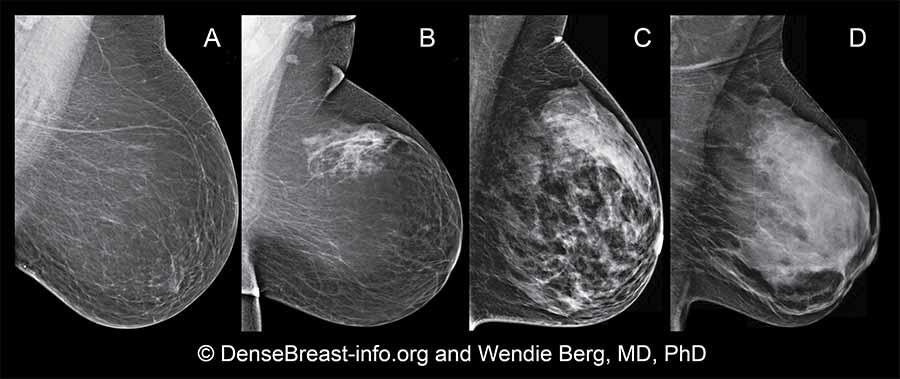
Mammogram call back density. Dense breast tissue can only be determined by mammography and is not something that can be felt or seen. Getting called back after a screening mammogram is pretty common but can be scary. Its a normal and common finding.
This is known as masking. About 40 percent of women who have mammograms have dense breast tissue which means they have more connective and fibrous tissue than usual. Keep in mind that the vast majority of patients who are asked to return for additional screening do not have breast cancer.
Breast imaging surveillance is usually initiated for two main reasons. You have dense breast tissue which can make it hard to see some parts of your breasts. Theres more tissue in there that can obscure a potential cancer.
This may also suggest that the mammogram should be compared with older ones to see if there have been changes in the area over time. Call back and Follow-Ups Following mammogram results after an initial breast cancer screening there are some situations in which the doctors may ask you to return for another mammogram. Dense breast tissue refers to the appearance of breast tissue on a mammogram.
A closer look at an area using a mammogram and possibly adding in an ultrasound Mark says. Though its a normal finding dense breast tissue appears as a. Mammogram Call Back Reasons.
An ultrasound will tell us additional information like if that area is solid or if theres fluid in it. Each time you have a mammogram your radiologist checks your breast density for two reasons. When a patient is called back from an abnormal screening mammogram additional imaging of the breast will be performed.
Some common reasons you may get called back after a mammogram. First dense breasts have a higher chance of developing breast cancer. The less fat there is the higher the density.
Dense breasts can also put women at higher risk of interval breast cancer. A call back should be fairly immediate. Until recently that information was rarely relayed to women though it was routinely noted in the radiologists medical report to the doctor as dense parenchyma that lowers the sensitivity of mammography.
Usually what they want to do is to take a magnified view. Second it is more difficult to find breast cancers in dense breasts compared with fatty breasts. Doctors use mammograms a type of breast exam to evaluate the internal structure of the breast.
If your mammogram shows you have asymmetrically dense breasts the difference in. If it is determined on a mammogram that you have high breast density supplemental imaging may be requested in the form of an automated breast ultrasound. Normal dense breast tissue can make it difficult for the radiologist to see parts of your breasts.
Women with more heterogeneously dense breast tissue and baseline screening mammograms those women tend to get called back a little bit more than women that have completely fatty breast tissue. When viewed on a mammogram women with dense breasts have more dense tissue than fatty tissue. This happens in a lot of womens health screening centres and is often a result of having dense breast tissue making a diagnostic mammogram or ultrasound much more difficult to read.
As a result mammography is less sensitive in women with dense breasts that is it is more likely to miss cancer. The most common reason is to watch closely an area seen on mammogram breast ultrasound or breast MRI. Thats because theres just more going on in the breast.
A call back to follow up on mammogram results usually means additional imaging. Most imaging facilities will contact the patient directly to explain that diagnostic breast imaging will. This is breast cancer that is diagnosed within 12 months of a normal mammogram result.
If you get called back. It means that the doctors have found something they wan to look at more closely. Women with dense breasts may be called back for follow-up tests more often than women with fatty breasts.
The radiologist found a possible area of concern. But getting called back does not mean you have breast cancer. To follow breast biopsy sites confirming over time that there is no unexpected change.
Getting called back for additional mammogram views or a biopsy is pretty common and doesnt necessarily mean you have cancer. This is referred to as diagnostic imaging. The amount of fibrous and glandular tissue as opposed to fatty tissue in your breasts.
Women with dense breasts that means more glandular tissue than fat tissue have a higher rate of callbacks. Dense breasts have less fat and more glandular tissue which can make it difficult to detect changes in the breast and small. Breast tissue is composed of milk glands milk ducts and supportive tissue dense breast tissue and fatty tissue nondense breast tissue.
You could be called back after your mammogram because. A Follow-up is in 6 months 1 year or 2 years.
Breast density reflects the amount of fibrous and glandular tissue in a womans breasts compared with the amount of fatty tissue in the breasts as seen on a mammogram. Extremely dense indicates that nearly all of the breast tissue is dense.

Single View Of Left Breast Nodular Increase In Retroareolar Density Download Scientific Diagram
Breast density is a measure that compares the amount of fatty tissue to the amount of breast tissue on a mammogram.
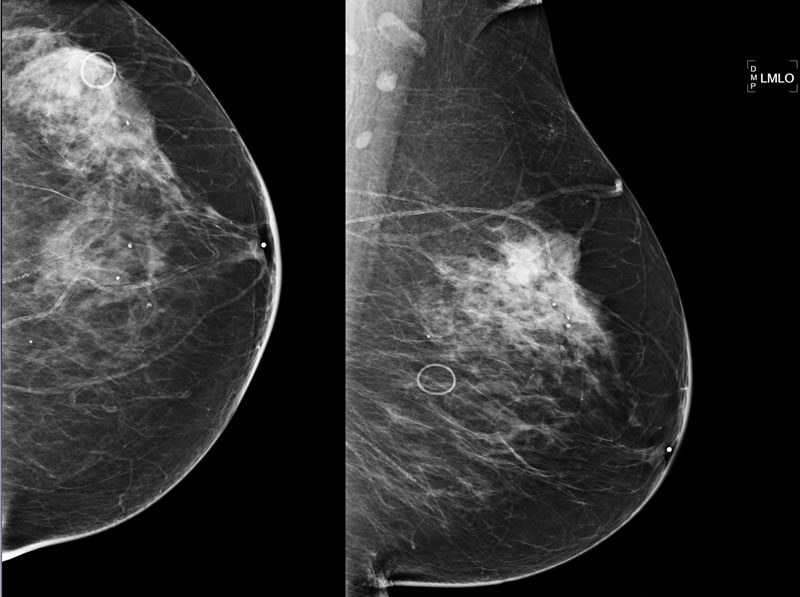
Nodular density in breast. Learn more about breast density. There is a fan shaped density radiating from the nipple. 51-75 percent glandular Scattered fibroglandular densities.
The word lump as in breast lump refers to something a person feels with their fingers. Both men and women at any age can have a breast nodule. The presence of a cyst in one breast A normal variation of the composition of fibrous tissue and fats in the breast A large amount of fibrous tissue or fibrosis.
These lumps can be any size. These are usual findings in a. But in some women theres little change.
Researchers studying breast density found that density itself was a predictor of breast cancer risk. We are obtaining previous mammogram films for comparison. 1 Questionable stellate nodular density is seen in the right breast.
If either the sonogram or the mammogram findings suggest that one of the nodules could be cancer it is likely that a biopsy will be recommended. The four current categories are. Some women have more dense breast tissue than others.
It is not clearly identifiable on the oblique view. Should i be concerned after mammography. There are a few scattered calcifications but no suspicious calcifications.
Wolfe assigned the mammograms to four parenchymal patterns N1 P1 P2 and Dy according to the distribution of fat and the prominence of the ducts. Additional views including compressed and mediolateral and 90 degree are advised for further evaluation. This pattern includes fat as well as linear densities enlarged ducts occupying no more than 25 of the breast.
There is a 11 cm rounded nodular density in the superior right breast middleposterior depth junction. About 1 in 10 women has this result. Other causes for a mammogram result showing an asymmetrical breast density are as follows.
Research has shown that women with dense breasts can be 6 times more likely to develop breast cancer. Characteristics of mass shape margin and density can suggest malignancy. It may be more prominent in the upper outer quadrant and more importantly it blends into the surrounding fat.
Most breast nodules are benign. Nodular glandular acute florid phase Dendritic chronic fibrotic phase Diffuse glandular. Your doctor andor the radiologist is shifting the responsibility back to the surgeon who has more experience with looking at the combination of mammograms physical exams and postoperative pathology to decide if further evaluation is necessary.
Most individuals associate nodules with breast cancer but there are many possible causes. The nodular density finding itself is not a risk factor for breast cancer. The mammographic image below shows a small nodule with suspicious indistinct margins possibly invasive ductal carcinoma.
For most women breasts become less dense with age. About half of women undergoing mammograms have. It is important to recognize the difference between healthy and unhealthy breast tissue.
For example one woman may develop one under the nipple while another may discover one in the breast tissue near her armpit. Your breast tissue may be called dense if you have a lot of fibrous or glandular tissue and not much fat in the breasts. Extremely dense 75 percent glandular Heterogeneously dense approx.
On the left a male breast with a nodular glandular pattern of gynecomastia. On a mammography report breast density is assigned to one of the following four categories The breasts are almost entirely fatty about 10 of women. A nodular density is usually due to fibrocystic changes the breast is generally a bunch of cysts that have the capacity to produce milk and the fibrous architecture that organizes the ducts where milk will flow and is generally benign.
Asymmetric density in the right breast. In general women with breasts that are classified as heterogeneously dense or extremely dense are considered to have dense breasts. In the lateral-central aspect the right breast noted the craniocaudad view there is a roughly 10mm ovoid density.
The word nodule is a term specialists use to describe a small mass. Additional imaging studies are needed to complete evaluation such as ultrasound or additional mammographic views. Many women have these changes.
The breast consists mainly of fat N normal P1. There is a 11 cm rounded nodular density in the superior right breast middleposterior depth junction. An individual may a develop a breast nodule in any part of her breast tissue.
Having dense breast tissue is common. Should i be concerned after mammography. Breast nodules are lumps or swelling in the breasts.
Global focal and developing and the chances of malignancy though low tend to increase if there are new developments from previous mammograms and if the lesion is or becomes palpable. 600-630 is the position in the breast as if the breast were a clock face looking from the front.
Http Pdf Posterng Netkey At Download Index Php Module Get Pdf By Id Poster Id 115755
I went for a mamogram on 112911 and I came out with a lump they did a spot check right there and then.
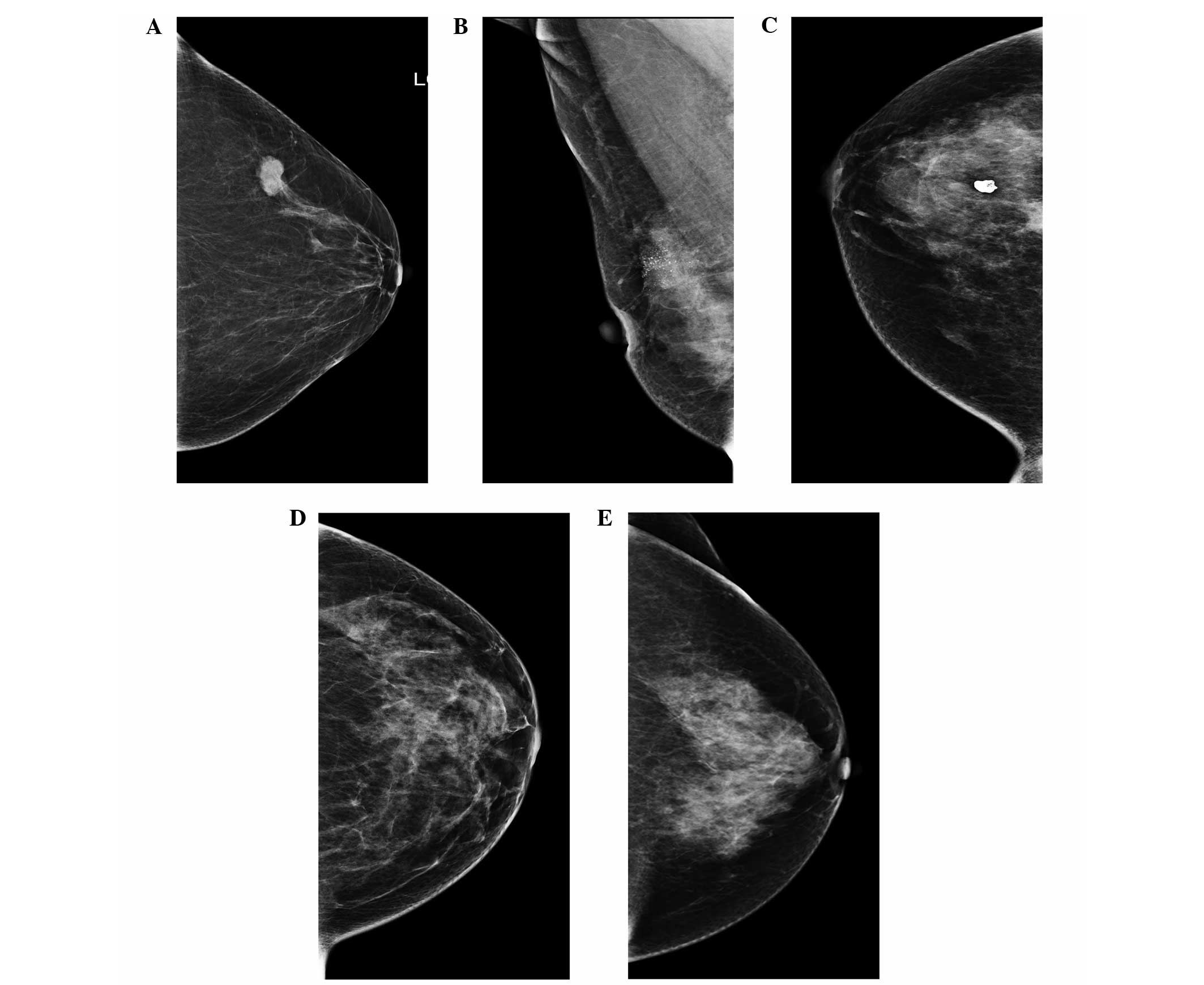
Asymmetric density should i be concerned. If a mammogram finds that there is an asymmetric density this usually means that an. A diagnostic mammogram is often needed to focus on the area. In a retrospective study of 300 consecutive nonpalpable breast cancers 6 were identified as.
Observation can be considered as a management option if benign imaging and clinical criteria are met. Formerly called developing density or neodensity is a focal asymmetry that is new larger or denser on current examination than previously. If you are not comfortable with hisher advise you could then follow up with another opinion from a breast surgeon.
Breast asymmetry is usually not a cause for concern though substantial asymmetry in the size or density of breasts may suggest an increased risk of breast cancer. Then pop back here and tell me how worried I should be about the large asymmetric density in the upper outer quadrant please keep in mind that I am young and have dense breasts so anything in a mammogram will be hard to see. To identify such a lesion one must have prior mammograms available for comparison.
I came out with asymmetric density. Fibrocystic changes dense stromal fibrosis or pseudoangiomatous stromal hyperplasia can cause. Can a asymmetric density be cancerous or are they normally beningh.
Usually the problem that you have means that a breast tissue bended over itself and caused the asymmetry. Asymmetrical tissuedensity should I be worried. When there is asymmetric density on a mammogram image it can mean that a mass is developing but it is far more likely that it is something else.
There are different types of asymmetry. Im having further testing done Monday. Breast asymmetry is usually no cause for concern.
Asymmetricfocal density Recommendation to primary care provider. A procedure called spot compression should be the next step in evaluating the area where the asymmetric tissue is located. My screening mammogram was less than 2 weeks ago but I have a history of uterine and fallopian tube cancer.
You should definately talk to the doctor who ordered the mammo and us about these findings. The Doctor called me and said I needed to go back in 6 months and have the mamogram done again just to make sure. However if theres a large variation in asymmetry or if your breast density suddenly changes this could be an indication of cancer.
Develop an asymmetric density. Mammo us are not always accurate on young women because of dense breasts and sometimes an MRI is indicated if this is the case. They are probably being on the safe side with you which is great.
In most cases the breasts are generally symmetric in their density and architecture but sometimes a report may reveal asymmetric density which is common and usually noncancerous. They seem to prioritize people and get the ones they are worried about in pretty fast. But just as your face and your feet may be slightly different from side to side so can your breasts.
Since the asymmetry is a potential abnormality you will probably need extra mammo views and maybe ultrasound to sort it out. In other words asymmetry can be quite normal. If a mammogram finds that there is an asymmetric density this usually means that an area of the breast is obscured and appears as a shadow.
80 of the time this turns out to be nothing of concern. If a mammogram finds that there is an asymmetric density this usually means that there is opacity within the breast. Hi A breast density is really non-specific finding that may or may not point out to a possible abnormality.
The developing asymmetry has a 1215 risk of malignancy but poses challenges of detection and interpretation due to the lack of typical features of cancer and the frequent absence of an ultrasound correlate. Currently magnetic resonance MR imaging does not have a recognized role in the assessment of breast asymmetry. Should I be worriedRead 1 Responses.
Spot compression will smooth it out and later mammograms will prove it. Failure to biopsy these lesions may lead to delayed diagnosis of breast cancer. An asymmetric density that becomes less evident but still persists after discontinuation of hormone replacement therapy could hypothetically represent estrogen-sensitive breast cancer.
However a radiologist may decide to do further testing if there are changes in breast tissue that are asymmetric as this could also indicate an important finding. This is quite common. Hi A breast density is really non-specific finding that may or may not point out to a possible abnormality.
This needs further assessment with diagnostic mammography and possibly ultrasound. Symmetry can be a beautiful thing and one of the things radiologists assess when we are looking at your mammogram. At least a quarter of the population has two different sized breasts.
There is usually no real cause for concern unless asymmetrical breast tissue is also linked with a clinically palpable asymmetry as breast asymmetry is a normal and usual state for some women.
Dense breast tissue refers to the appearance of breast tissue on a mammogram. Breast density is not related to the size look or feel of your breasts.
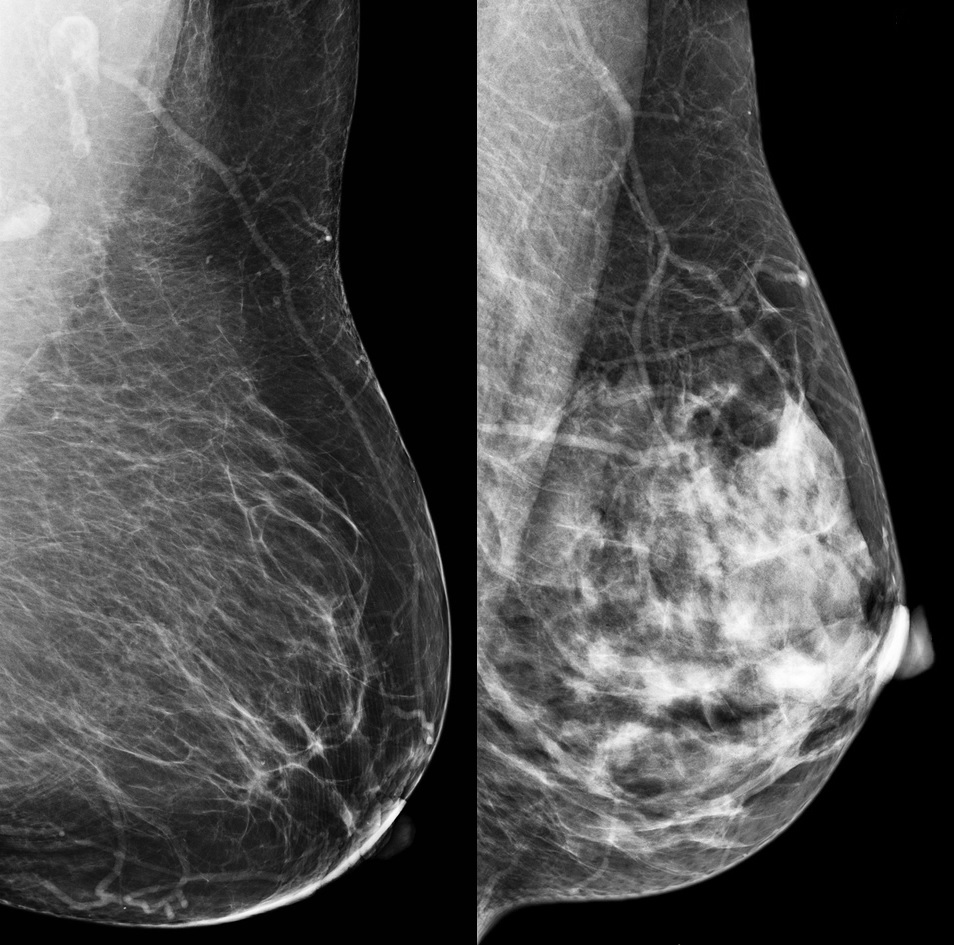
What Does It Mean To Have Dense Breasts Cdc
Why Are Dense Breasts Concerning.

Density breast mammogram. Dense breast tissue may increase a womans chance of developing breast cancer. It cant be found by having a healthcare professional examine your breasts or by examining your breasts yourself. Dense breasts have relatively high amounts of glandular tissue and fibrous connective tissue and relatively low amounts of fatty breast tissue.
Breast density is a measure used to describe mammogram images. Breast density can only be seen on a mammogram. Breast tissue is composed of milk glands milk ducts and supportive tissue dense breast tissue and fatty tissue nondense breast tissue.
Breast density isnt based on how your breasts feel and its not related to breast size or firmness. Breast density describes the amount of glandular tissue in the breast meaning dense breasts have less fatty tissue than normal breasts. The DENSE Trial is undergoing to evaluate MRI as an additional screening tool in women aged 50-75 years with extremely dense breasts 5.
Although dense breast tissue which appears white on mammograms can mask the presence of tumors a new study suggests that having dense breasts alone may not be a reason for additional screening. Breast density is classified on a mammogram report in one of four ways. When a woman goes for her Mammogram her hopes are pinned on the result being clear.
One important factor is that dense breast tissue shows up white on a mammogram. Connective tissue helps hold everything place. Breasts are made up of breast tissue the milk ducts and lobules which may be called glandular tissue and fat.
There are 4 categories of breast density. They check your mammogram for abnormal areas and also look at breast density. It is classified on a scale of 1 to 4 with 1 being the least dense and 4 being the most.
Breast density is a term that describes the relative amount of these different types of breast tissue as seen on a mammogram. Skin also appears radiopaque at mammography and accounts for some portion of tissue density. Density is typically gauged by the radiologist who reads the mammograms.
Also detection of breast cancer using mammography is more difficult in women with dense breast tissue. High breast density as seen on a mammogram is linked to an increased risk of breast cancer. How Breast Density Will Appear on Mammograms On mammogram images fatty tissue appears gray and transparent while glandular tissue looks opaque and.
Conversely fatty breast tissue appears black on a mammogram making it much easier to notice abnormalities. Here is the classification system used by radiologists interpreting your mammogram. Other Topics in Patient Care Health Info.
Breast density is important for several reasons. Few women realise that their Mammogram determines another important result one that is not routinely given to them - their level of Breast Density. This makes it harder for the radiologist to pinpoint abnormalities in breast tissue because tumors and masses also present as white on the test.
When viewed on a mammogram women with dense breasts have more dense tissue than fatty tissue. However no large data is available in this regard. According to the BI-RADS reporting system the levels are from left to right almost entirely fatty scattered areas of fibroglandular density heterogeneously dense and extremely dense.
In the United States among women aged 40 to 74 approximately 40 to 50 have dense breasts. High breast density is relatively prevalent. Breast density reflects the amount of fibrous and glandular tissue in a womans breasts compared with the amount of fatty tissue in the breasts as seen on a mammogram.
The term breast density refers to the relative amount of radiopaque epithelial and stromal tissue elements compared with the amount of radiolucent fatty elements seen at mammography Fig 1. Factors that can increase breast density. Women who score a 3 or a 4 are typically said to have high density.
Dense breasts dont feel or look any different from breasts that have a larger proportion of fatty tissue. Breast density is seen only on mammograms. Breast density is a measure that compares the amount of fatty tissue to the amount of breast tissue on a mammogram.
Research has shown that women with dense breasts can be 6 times more likely to develop breast cancer. A Stronger Influencer for Breast. Radiologists are doctors who read x-rays like mammograms.
Even with dense breasts a screening mammogram every two years is still the best way to detect breast cancer early in women aged 50-74 with no symptoms. Contrast-enhanced MRI is also advocated as an adjunct to screening mammography in extremely dense breasts. Only a mammogram can reveal breast density.
Radiologists use mammogram images to grade breast tissue based on the proportion of dense to nondense tissue. On a mammography report breast density is assigned to one of the following four categories The breasts are almost entirely fatty about 10 of women. BreastScreen Australia constantly monitors and reviews evidence to ensure our program is delivering safe high-quality and evidence-based care.
Its a normal and common finding. A woman with scattered fibroglandular breast tissue has breasts made up mostly of. Learn more about breast density.
Scattered fibroglandular tissue refers to the density and composition of your breasts. Its not a measure of how the breasts feel.