Having dense breast tissue is common and not abnormal but. You have dense breast tissue.

Digital Breast Tomo Cuts Callback Rate In Screening Setting
The pictures werent clear or didnt show some of your breast tissue and need to be retaken.
Mammogram call back density. Dense breast tissue can only be determined by mammography and is not something that can be felt or seen. Getting called back after a screening mammogram is pretty common but can be scary. Its a normal and common finding.
This is known as masking. About 40 percent of women who have mammograms have dense breast tissue which means they have more connective and fibrous tissue than usual. Keep in mind that the vast majority of patients who are asked to return for additional screening do not have breast cancer.
Breast imaging surveillance is usually initiated for two main reasons. You have dense breast tissue which can make it hard to see some parts of your breasts. Theres more tissue in there that can obscure a potential cancer.
This may also suggest that the mammogram should be compared with older ones to see if there have been changes in the area over time. Call back and Follow-Ups Following mammogram results after an initial breast cancer screening there are some situations in which the doctors may ask you to return for another mammogram. Dense breast tissue refers to the appearance of breast tissue on a mammogram.
A closer look at an area using a mammogram and possibly adding in an ultrasound Mark says. Though its a normal finding dense breast tissue appears as a. Mammogram Call Back Reasons.
An ultrasound will tell us additional information like if that area is solid or if theres fluid in it. Each time you have a mammogram your radiologist checks your breast density for two reasons. When a patient is called back from an abnormal screening mammogram additional imaging of the breast will be performed.
Some common reasons you may get called back after a mammogram. First dense breasts have a higher chance of developing breast cancer. The less fat there is the higher the density.
Dense breasts can also put women at higher risk of interval breast cancer. A call back should be fairly immediate. Until recently that information was rarely relayed to women though it was routinely noted in the radiologists medical report to the doctor as dense parenchyma that lowers the sensitivity of mammography.
Usually what they want to do is to take a magnified view. Second it is more difficult to find breast cancers in dense breasts compared with fatty breasts. Doctors use mammograms a type of breast exam to evaluate the internal structure of the breast.
If your mammogram shows you have asymmetrically dense breasts the difference in. If it is determined on a mammogram that you have high breast density supplemental imaging may be requested in the form of an automated breast ultrasound. Normal dense breast tissue can make it difficult for the radiologist to see parts of your breasts.
Women with more heterogeneously dense breast tissue and baseline screening mammograms those women tend to get called back a little bit more than women that have completely fatty breast tissue. When viewed on a mammogram women with dense breasts have more dense tissue than fatty tissue. This happens in a lot of womens health screening centres and is often a result of having dense breast tissue making a diagnostic mammogram or ultrasound much more difficult to read.
As a result mammography is less sensitive in women with dense breasts that is it is more likely to miss cancer. The most common reason is to watch closely an area seen on mammogram breast ultrasound or breast MRI. Thats because theres just more going on in the breast.
A call back to follow up on mammogram results usually means additional imaging. Most imaging facilities will contact the patient directly to explain that diagnostic breast imaging will. This is breast cancer that is diagnosed within 12 months of a normal mammogram result.
If you get called back. It means that the doctors have found something they wan to look at more closely. Women with dense breasts may be called back for follow-up tests more often than women with fatty breasts.
The radiologist found a possible area of concern. But getting called back does not mean you have breast cancer. To follow breast biopsy sites confirming over time that there is no unexpected change.
Getting called back for additional mammogram views or a biopsy is pretty common and doesnt necessarily mean you have cancer. This is referred to as diagnostic imaging. The amount of fibrous and glandular tissue as opposed to fatty tissue in your breasts.
Women with dense breasts that means more glandular tissue than fat tissue have a higher rate of callbacks. Dense breasts have less fat and more glandular tissue which can make it difficult to detect changes in the breast and small. Breast tissue is composed of milk glands milk ducts and supportive tissue dense breast tissue and fatty tissue nondense breast tissue.
You could be called back after your mammogram because. A Follow-up is in 6 months 1 year or 2 years.
You may stop having any lumps pain or nipple discharge that you used to have. Hi What you call extra precautions are fairly routine steps to take when there are changes from one mammogram to the next esp.

What S The Best Way To Screen Dense Breasts
Let us know how the second mammogram works out.
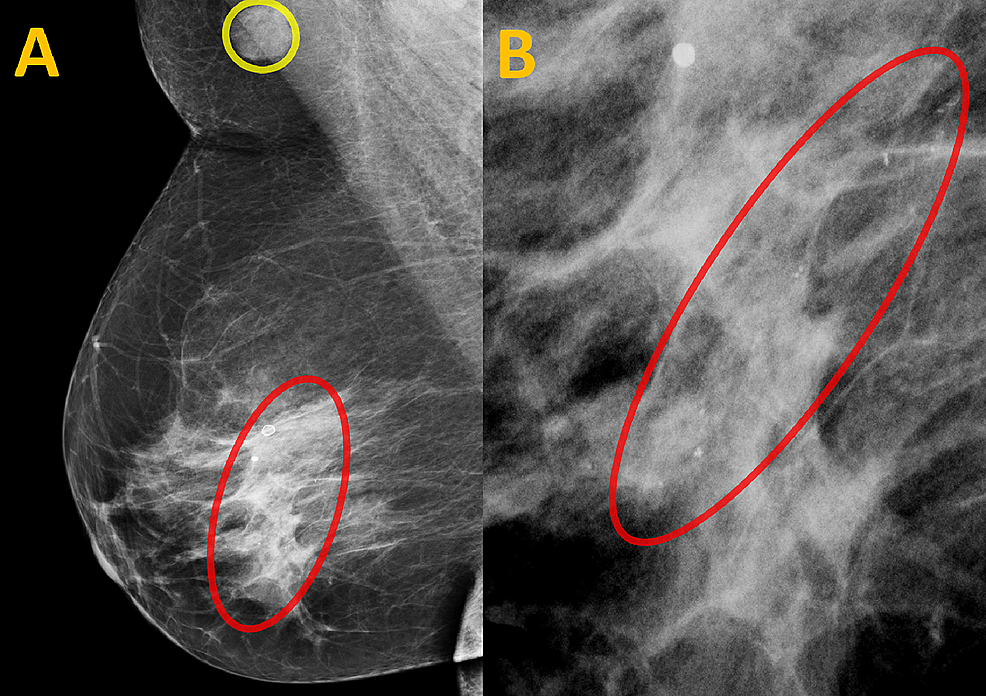
Change in breast tissue since last mammogram. Typically a breast cancer diagnosis will only be given to a very small percentage of women with asymmetrical breast tissue. You will lie face down inside a narrow tube for up to an hour. The pictures werent clear or didnt show some of your breast tissue and need to be retaken.
In the very dense breast the sensitivity goes down to as low as 48 percent. Some may develop noncancerous fibrous tissue within the normal glandular tissue. With the breasts being a fat storage site a weight change can cause a change in the mammographic density of the breast.
Furthermore only a very small percentage of women with asymmetrical breast tissue will end up actually having a breast biopsy. If found on mammogram densities require additional mammographic views compression views and p. Last modified on January 10 2017 at 1028 AM.
The calcium readily absorbs the X-rays from mammograms. Talk to your doctor about different methods. Fat decreases thereby decreasing density on mammogram.
This is a significant issue because in postmenopausal. 1 doctor agrees Send thanks to. This is an important etiology for increased breast density which is seen only on the irradiated breast.
Breast tissue density affects the ability of mammography to successfully detect tumors. The firm breast tissue becomes less firm that is why all the jokes about older ladies breasts hanging. Some breast changes can be felt by a woman or her health care provider but most can be detected only during an imaging procedure such as a mammogram MRI or ultrasound.
There sure are lots of changes as you get older. Birth control is important at that time of life but I sure hate to see hormones used. You have dense breast tissue which can make it hard to see some parts of your breasts.
Getting a call-back doesnt mean that you have a serious condition like breast cancer. Your breast tissue can change when youre ovulating and can often. Some women will need an MRI magnetic resonance imaging.
And because your breast tissue is less dense mammograms may be easier to interpret. This test may be used to look more closely at a change that was seen on a mammogram. Theres no way to know for sure whether the changes are due to the bioidentical hormones youve been taking but hormones of any type can certainly affect breast tissue.
Calcifications typically dont show up on ultrasounds and they never show up. Breast density is not a static. There are a number of reasons why a womans breasts can change in size or volume including trauma puberty and hormonal changes.
The Mayo Mammography Health Study research team is studying how womens breasts change in density over time what underlies these changes and whether these changes are associated with the risk of developing breast cancer. Whether a breast change was found by your doctor or you noticed a change its important to follow up with your doctor to have the change checked and properly diagnosed. Levels drop and your breast tissue becomes less dense and more fatty.
Change in Breast Tissue Since the Last Mammogram. Radiation can cause some changes in the breast tissue and skin. A womans breasts and their consistency naturally change over her lifetime.
Low-density breast tissue makes it easier for mammography to visualize tumors than does higher-density breast tissue. For several decades it has been known that high mammographic density representing a high amount of epithelial and stromal tissue in the breast is one of the strongest independent risk factors for breast cancer 1 2. Still the biological mechanism of the increased risk in women with high mammographic density is poorly understood 3.
The breast tissue changes w age and hormonal changes. These changes are benign even though a focal area of fibrosis can look like a cancer on the mammogram. I pay more attention to my breasts since my doctor did follow-up tests on changes that were found 8.
Involution of the breast implies that the ratio gland. Calcifications are small deposits of calcium that show up on mammograms as bright white specks or dots on the soft tissue background of the breasts. In the fatty breast mammography sensitivity is 98 percent.
This is based on changes to breast tissue since you had the last mammogram. In some cases your doctor will call you back after a mammogram is done. Ultrasound andor needle biopsy may be necessary.
Growth of a nodule of unknown type that is being followed. You could be called back after your mammogram because. The changes continue even after the radiation has been stopped.
This first mammogram after lumpectomy and radiation will become the new standard against which future mammograms of the remaining breast tissue are compared. Usually about 3 of breast screening mammograms will show asymmetric breast tissue. A breast MRI uses radio waves and strong magnets to make detailed pictures of the inside of the breast.
Dense breast tissue refers to the appearance of breast tissue on a mammogram. Breast density is not related to the size look or feel of your breasts.
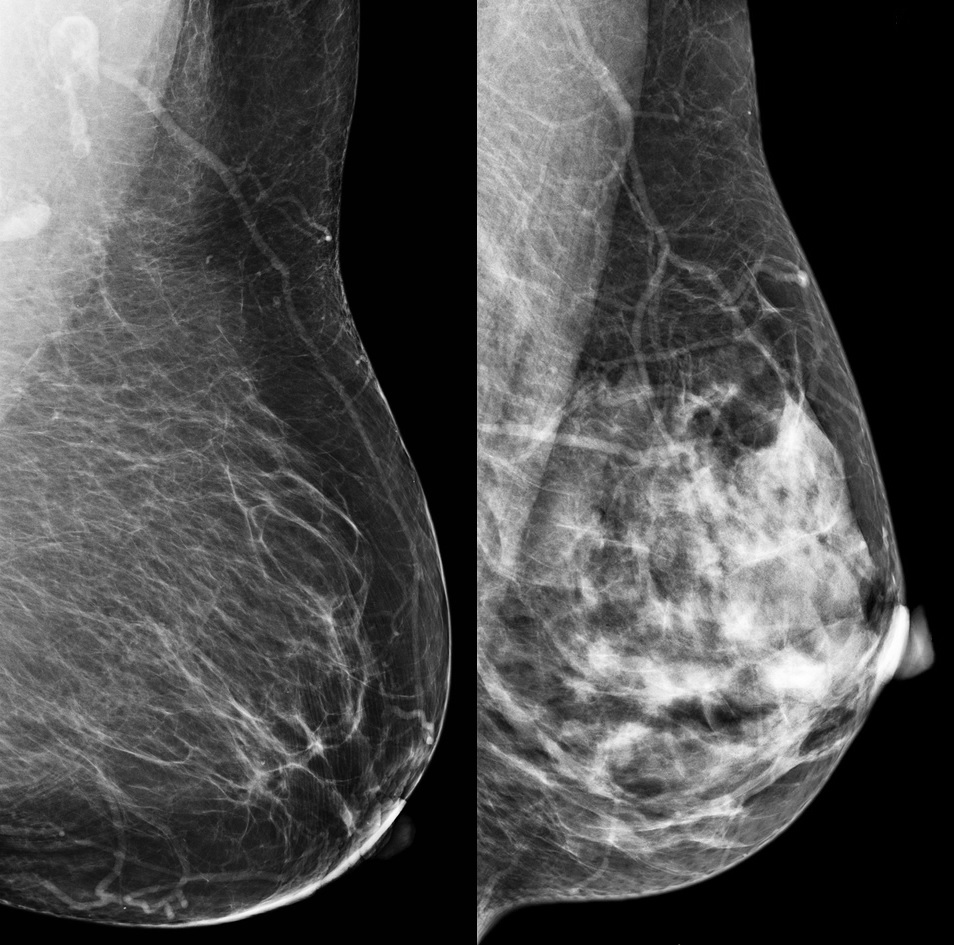
What Does It Mean To Have Dense Breasts Cdc
Why Are Dense Breasts Concerning.

Density breast mammogram. Dense breast tissue may increase a womans chance of developing breast cancer. It cant be found by having a healthcare professional examine your breasts or by examining your breasts yourself. Dense breasts have relatively high amounts of glandular tissue and fibrous connective tissue and relatively low amounts of fatty breast tissue.
Breast density is a measure used to describe mammogram images. Breast density can only be seen on a mammogram. Breast tissue is composed of milk glands milk ducts and supportive tissue dense breast tissue and fatty tissue nondense breast tissue.
Breast density isnt based on how your breasts feel and its not related to breast size or firmness. Breast density describes the amount of glandular tissue in the breast meaning dense breasts have less fatty tissue than normal breasts. The DENSE Trial is undergoing to evaluate MRI as an additional screening tool in women aged 50-75 years with extremely dense breasts 5.
Although dense breast tissue which appears white on mammograms can mask the presence of tumors a new study suggests that having dense breasts alone may not be a reason for additional screening. Breast density is classified on a mammogram report in one of four ways. When a woman goes for her Mammogram her hopes are pinned on the result being clear.
One important factor is that dense breast tissue shows up white on a mammogram. Connective tissue helps hold everything place. Breasts are made up of breast tissue the milk ducts and lobules which may be called glandular tissue and fat.
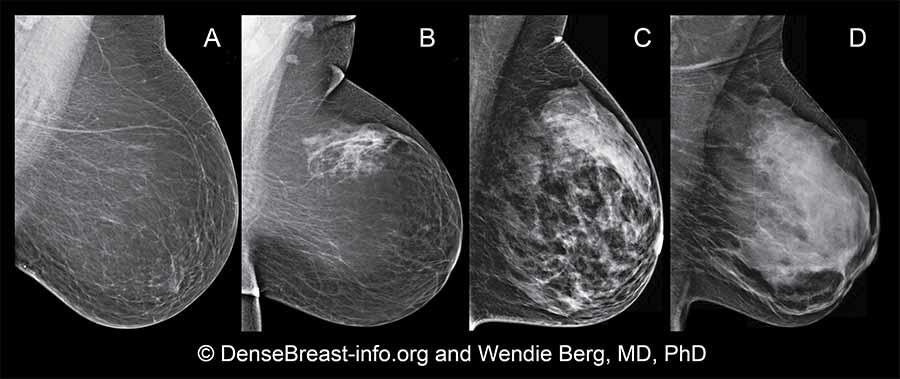
There are 4 categories of breast density. They check your mammogram for abnormal areas and also look at breast density. It is classified on a scale of 1 to 4 with 1 being the least dense and 4 being the most.
Breast density is a term that describes the relative amount of these different types of breast tissue as seen on a mammogram. Skin also appears radiopaque at mammography and accounts for some portion of tissue density. Density is typically gauged by the radiologist who reads the mammograms.
Also detection of breast cancer using mammography is more difficult in women with dense breast tissue. High breast density as seen on a mammogram is linked to an increased risk of breast cancer. How Breast Density Will Appear on Mammograms On mammogram images fatty tissue appears gray and transparent while glandular tissue looks opaque and.
Conversely fatty breast tissue appears black on a mammogram making it much easier to notice abnormalities. Here is the classification system used by radiologists interpreting your mammogram. Other Topics in Patient Care Health Info.
Breast density is important for several reasons. Few women realise that their Mammogram determines another important result one that is not routinely given to them - their level of Breast Density. This makes it harder for the radiologist to pinpoint abnormalities in breast tissue because tumors and masses also present as white on the test.
When viewed on a mammogram women with dense breasts have more dense tissue than fatty tissue. However no large data is available in this regard. According to the BI-RADS reporting system the levels are from left to right almost entirely fatty scattered areas of fibroglandular density heterogeneously dense and extremely dense.
In the United States among women aged 40 to 74 approximately 40 to 50 have dense breasts. High breast density is relatively prevalent. Breast density reflects the amount of fibrous and glandular tissue in a womans breasts compared with the amount of fatty tissue in the breasts as seen on a mammogram.
The term breast density refers to the relative amount of radiopaque epithelial and stromal tissue elements compared with the amount of radiolucent fatty elements seen at mammography Fig 1. Factors that can increase breast density. Women who score a 3 or a 4 are typically said to have high density.
Dense breasts dont feel or look any different from breasts that have a larger proportion of fatty tissue. Breast density is seen only on mammograms. Breast density is a measure that compares the amount of fatty tissue to the amount of breast tissue on a mammogram.
Research has shown that women with dense breasts can be 6 times more likely to develop breast cancer. A Stronger Influencer for Breast. Radiologists are doctors who read x-rays like mammograms.
Even with dense breasts a screening mammogram every two years is still the best way to detect breast cancer early in women aged 50-74 with no symptoms. Contrast-enhanced MRI is also advocated as an adjunct to screening mammography in extremely dense breasts. Only a mammogram can reveal breast density.
Radiologists use mammogram images to grade breast tissue based on the proportion of dense to nondense tissue. On a mammography report breast density is assigned to one of the following four categories The breasts are almost entirely fatty about 10 of women. BreastScreen Australia constantly monitors and reviews evidence to ensure our program is delivering safe high-quality and evidence-based care.
Its a normal and common finding. A woman with scattered fibroglandular breast tissue has breasts made up mostly of. Learn more about breast density.
Scattered fibroglandular tissue refers to the density and composition of your breasts. Its not a measure of how the breasts feel.